Support for health services
Togo, 2024
Social Issue
In Togo, 1 in every 15 children dies before reaching the age of five, and the maternal mortality rate stands at 396 per 100,000 live births. In Guinea, the situation is even more dire, with one in ten children dying before their fifth birthday and a maternal mortality rate of 576 per 100,000 live births.
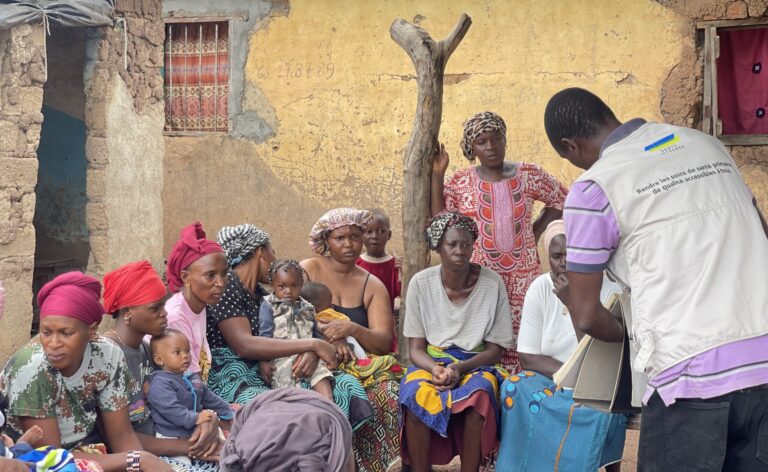
Both Togo and Guinea lack the strong primary healthcare systems needed to deliver effective care. Critical components, including trained personnel, medical supplies, and ongoing education, are either insufficient or absent. As a result, six million people in Togo and eight million in Guinea currently live in rural communities without access to basic healthcare. These statistics underscore the urgent need to strengthen healthcare delivery in these regions, not only to ensure access to essential health services but also to improve preparedness for emerging epidemics and pandemics.
Our Response
Since 2004, Integrate Health has worked alongside community leaders, government officials, and public health experts, being the first to build and scale one of the most effective HIV care programs in Togo, and later to reduce maternal and child mortality through the Integrated Primary Health Care Program.
Netri has supported Integrate Health since 2021, and we are now renewing our commitment with unrestricted funding to support their work over a three-year period, contributing $30,300 annually.
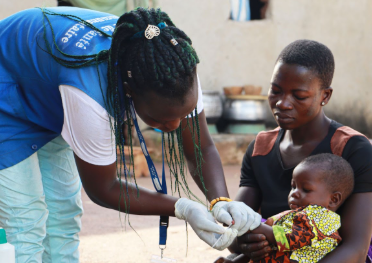
The Integrated Primary Health Care Program demonstrates key innovations required to strengthen the delivery of primary care at scale. This approach integrates professional Community Health Workers (CHWs) with improved care at public clinics, a powerful combination that transforms how primary healthcare is delivered and saves lives.
The Program delivers targeted innovations designed to overcome the most significant barriers to accessing care in Togo and ensures the delivery of high-quality, patient-centered, and accessible primary healthcare. These innovations are implemented through a health systems learning approach, in which rigorous data is collected and used to drive continuous quality improvement, and shared with policymakers to inform national scale-up. This package includes:
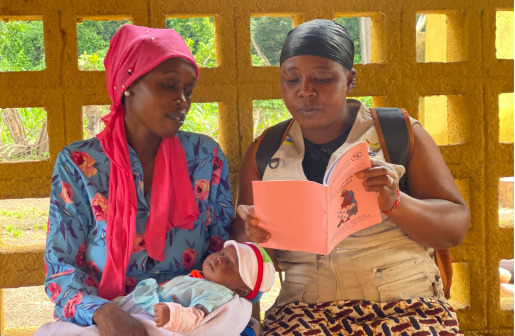
- Professional CHWs who are trained, equipped, supervised, and salaried. They proactively identify patients and deliver home-based care to ensure population-level coverage.
- Clinical capacity building, with trained clinical mentors providing coaching to nurses and midwives in public clinics to ensure providers are skilled and care is effective.
- Supply chain and infrastructure strengthening, including training pharmacy managers in improved supply chain practices and making essential infrastructure upgrades to ensure providers have the tools they need.
- Elimination of user fees for pregnant women and children under five, removing financial barriers to care.
Together, these services create a seamless system of care that ensures access to high-quality health services, directly supporting national universal health coverage goals, at a replication cost of approximately $15 per capita (FY 2024 costing analysis).
In partnership with the governments of Togo and Guinea, Integrate Health is currently delivering this innovative approach to 325,669 people. 210,905 across five districts in the Kara region of Togo, and 114,764 in one district of the Kankan region in Guinea.
Expected Social Impact
An evaluation of the Integrated Primary Health Care Program (IPCP) in the Kozah district (2015–2020) revealed a 30% reduction in under-five mortality, twice the national average. This finding was detailed in a study published in Pediatrics in September 2021.
Programmatic data from IPCP in Togo also demonstrated significant improvements in childhood vaccination coverage, which rose from 81% to 89% between 2019 and 2021 across four IH-supported districts in the Kara region.
These findings offer compelling evidence that Integrate Health’s approach, particularly the deployment of Community Health Workers (CHWs), has improved access to free, high-quality care in supported districts.