
Promoting the productivity of smallholder farmers
Colombia, 2025

Social Issue
Indigenous and Afro-Colombian communities in southwestern Colombia live in conditions of structural poverty, geographic isolation, and limited institutional presence. Many families depend on illicit economies, primarily coca cultivation, due to a lack of sustainable income alternatives. Furthermore, these regions have suffered from forced displacement, land dispossession, and the deep-seated impact of armed conflict. The absence of formal rural value chains perpetuates their economic and social vulnerability.
Our Response
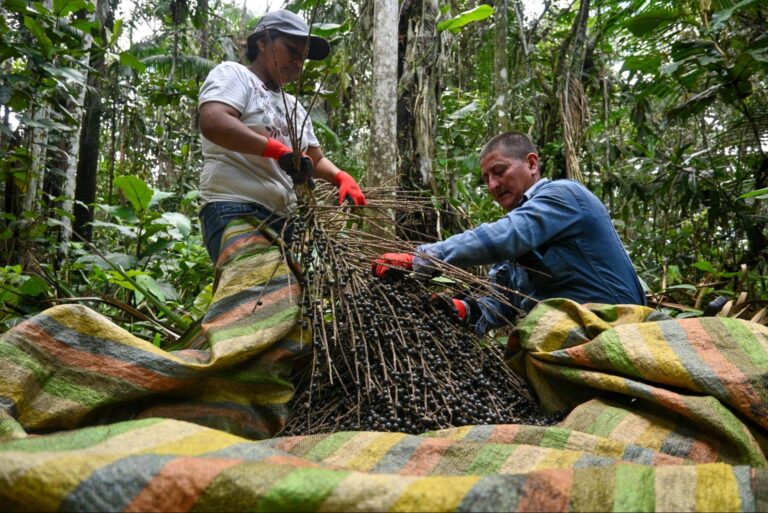
Netri, in collaboration with Beneficial Returns, has granted a loan to Amapuri, a Colombian company founded in 2012 that promotes a sustainable value chain for açaí and hearts of palm, offering small-scale producers a real alternative to coca cultivation. The company operates under a vertically integrated model that spans from fruit harvesting to the processing and marketing of finished products. Amapuri now works directly with over 800 supplier families, the majority of whom are indigenous and Afro-Colombian. The company provides technical assistance, high-yield seedlings, organic fertilizers, cold-storage infrastructure, and a fair payment system that can exceed average market prices by up to 30%.
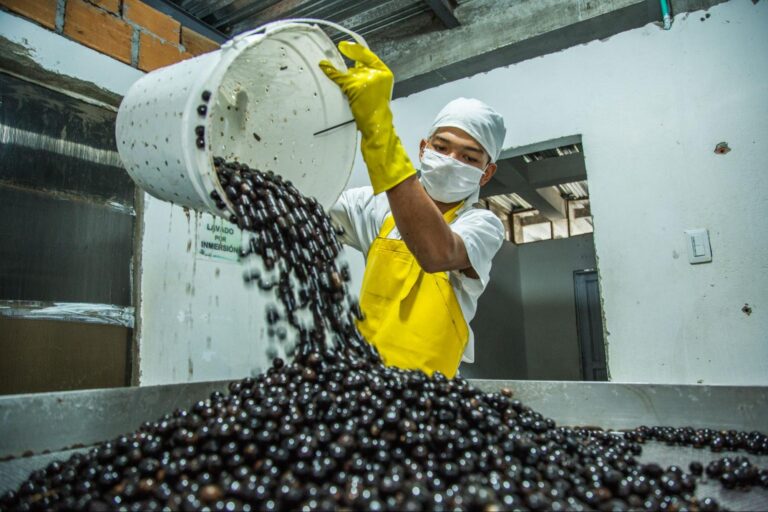
The company operates approximately 40 refrigerated collection centres in rural communities, where it receives fruit every 2 to 3 days. From there, products are transported to its processing plants. The main plant in Puerto Asís (Putumayo) handles initial transformation, while the Mosquera plant—equipped with blast freezers and pasteurization technology—is dedicated to final processing and the manufacturing of products such as açaí sorbet and ready-to-use mixes for juice bars.
The granted loan will allow for the automation of processes and the expansion of infrastructure at the Putumayo plant, improved storage and logistics capacity, progress toward IFS certification—essential for accessing new European markets—and the strengthening of the sustainable supply chain for small-scale producers.
Expected Social Impact
Thanks to Amapuri’s model, farmers have doubled their açaí yields and gained access to stable income in traditionally excluded regions, contributing to the replacement of illicit economies with sustainable agroforestry models. This process fosters greater economic resilience within indigenous and Afro-Colombian communities, generates local employment in collection centres and processing plants, and promotes the growth of a sustainable value chain with positive impacts for both producer families and the environment.